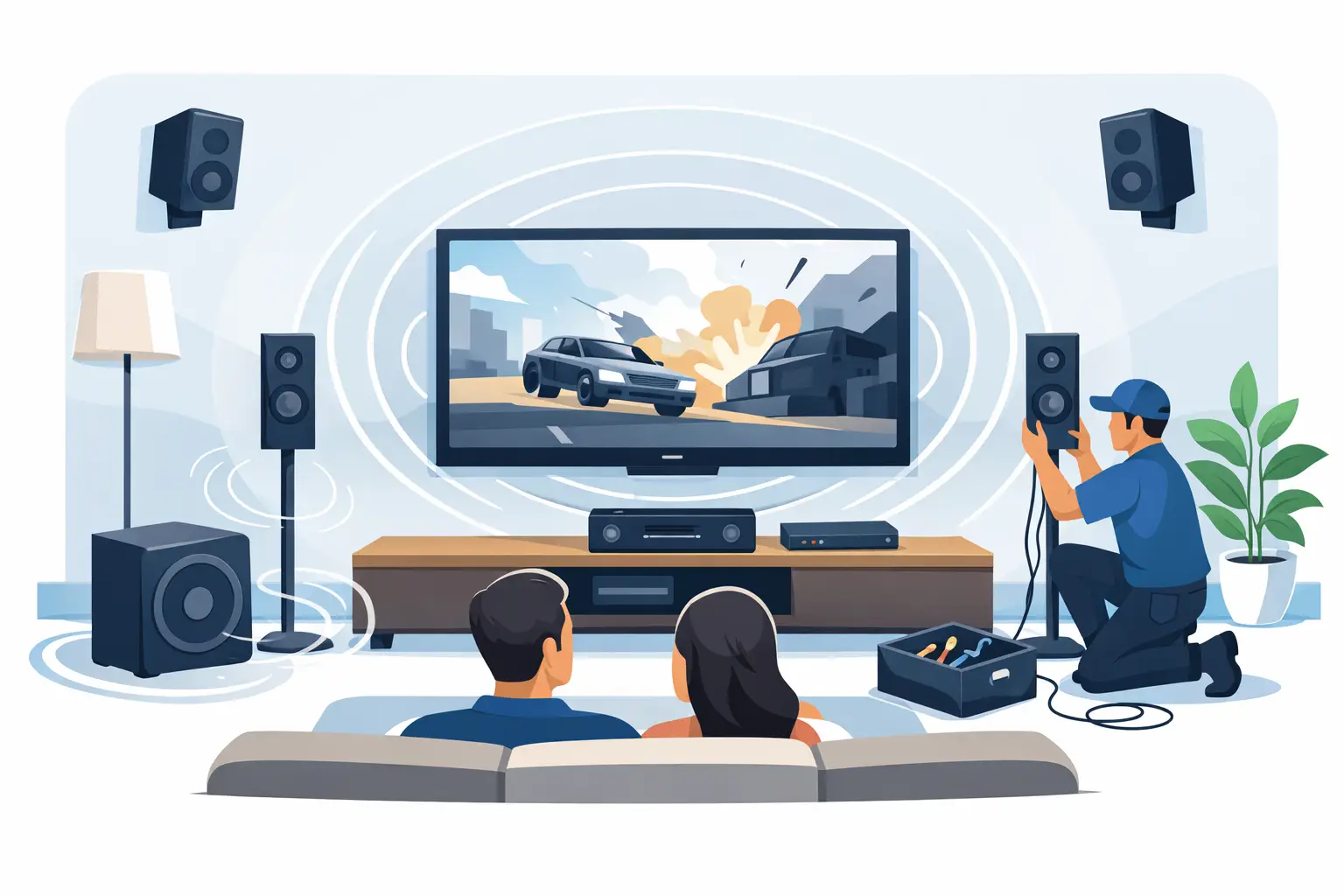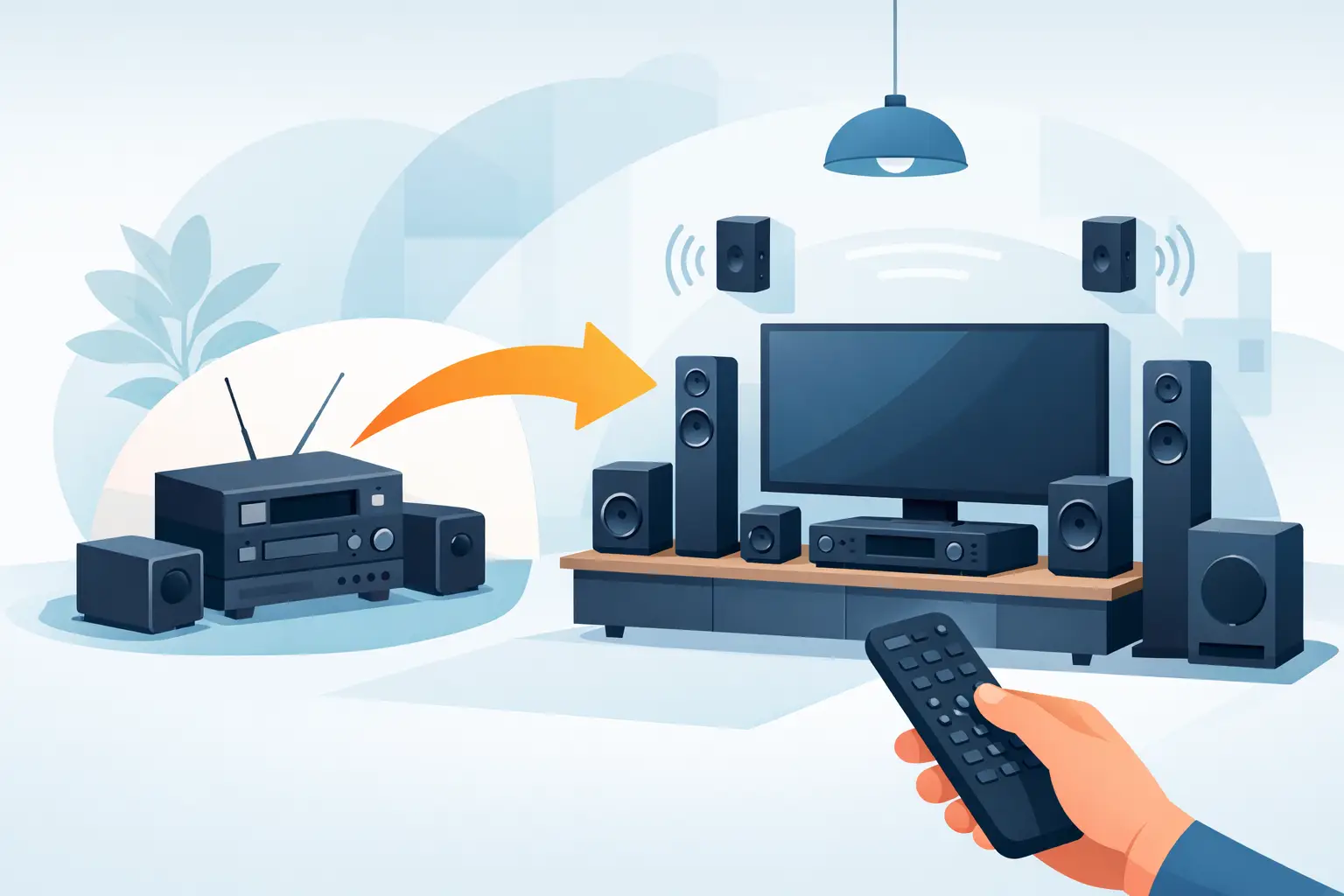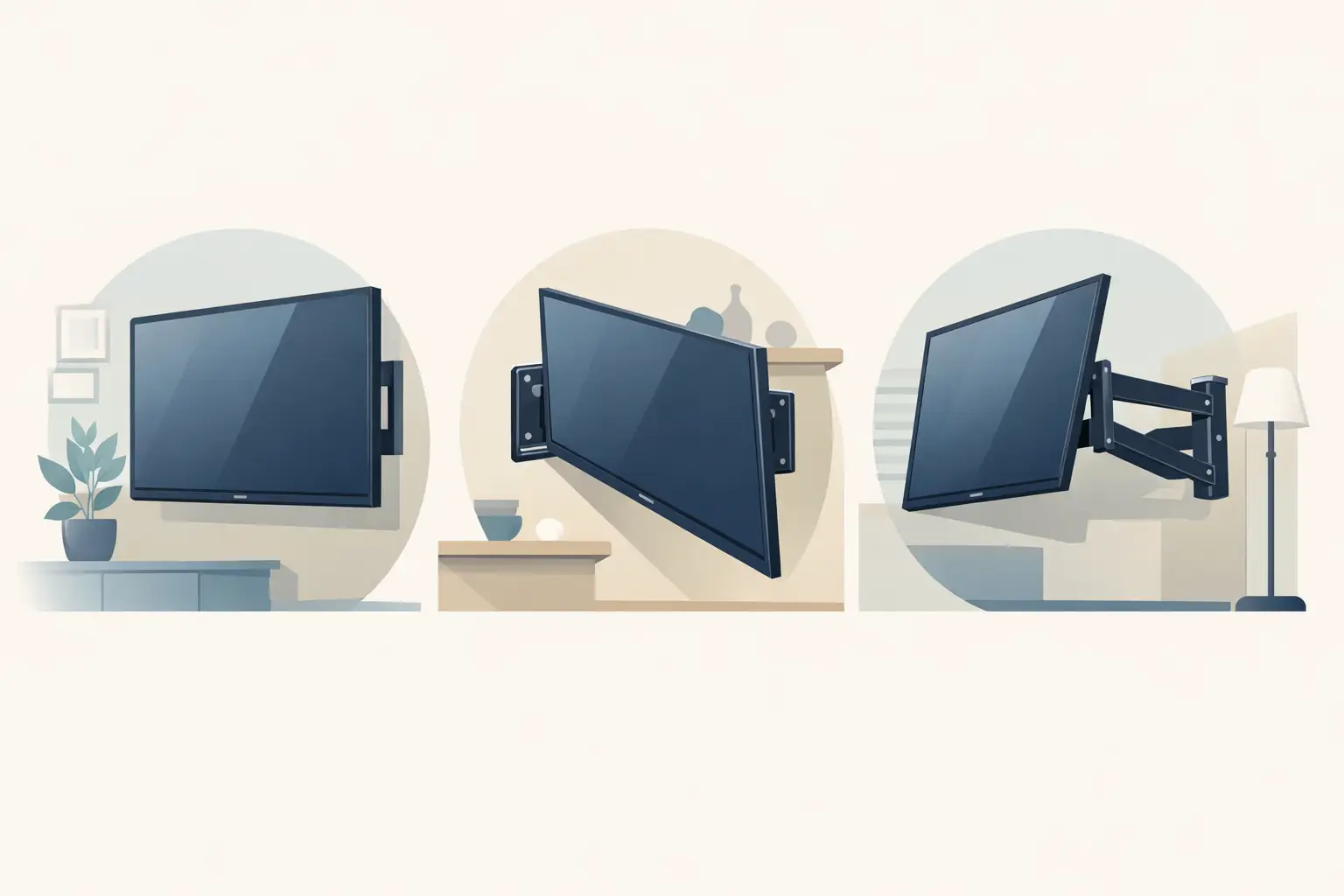
A great theater room usually looks impressive in photos for one reason and performs well in real life for another. The photos show the screen, seating, and lighting. The real performance comes from decisions most people never see – room shape, speaker placement, wiring, sightlines, acoustics, and control. If you are figuring out how to design a theater room, those behind-the-scenes choices matter just as much as the equipment you buy.
The good news is that a well-designed room does not have to start with a blank check. It starts with a clear plan. The best theater rooms are built around how your family actually watches movies, sports, and streaming content, along with the room you have and the budget you want to keep.
Start with the room, not the gear
One of the most common mistakes in theater design is picking a projector, giant TV, or speaker package before the room is understood. A basement with low ceilings needs a different plan than a bonus room with windows. A narrow room calls for different seating and speaker spacing than a wide one. Even the entry door location can affect screen placement and traffic flow.
Before choosing products, define the room dimensions, ceiling height, window locations, and whether the space will be dedicated only to movies or used for more than one purpose. A true theater room has fewer compromises because the room can be optimized for sound and light control. A media room may need to balance theater performance with everyday living.
That distinction matters. If the room has to serve kids’ gaming, Sunday football, and casual hangouts, you may prioritize flexible seating, brighter finishes, and simpler control. If the goal is a cinematic experience with lights down and distractions minimized, the design should push harder toward acoustic treatment, blackout control, and more precise speaker placement.
How to design a theater room around screen size
Most people start by saying they want the biggest screen possible. That is understandable, but screen size should follow viewing distance and room layout, not ego. If the screen is too large for the seating distance, the image can feel overwhelming or expose content flaws. Too small, and the room never feels immersive.
A practical design starts with the primary row of seats. Once that viewing distance is set, the right screen size becomes easier to calculate. In many dedicated theaters, a projector and screen create the most cinematic feel. In brighter rooms or multipurpose spaces, a large flat panel may be the better choice because it handles ambient light more effectively and requires less room planning.
Projectors also introduce trade-offs. They can deliver a true theater experience, but they depend heavily on light control, throw distance, and screen choice. Flat panels are simpler and brighter, but at very large sizes they can shift the budget quickly. The right answer depends on the room and how the space will be used day to day.
Seating layout is about comfort and sightlines
Good seating design is not just about choosing recliners. It is about making sure every seat has a comfortable viewing angle, clear line of sight, and balanced sound. That becomes especially important when a room includes two rows.
If you want multiple rows, the rear row often needs a riser so viewers can see over the front seats. The riser height depends on screen height, seat back height, and the distance between rows. This is the kind of detail that is easy to overlook early and expensive to correct later.
Room width also affects whether you should use a single row of larger seats, two rows of narrower seating, or a sectional in a media-style layout. There is no universal best answer. A family with young kids may love a more casual, flexible setup. A homeowner building a dedicated movie room may prefer fixed theater seating with cupholders and power recline. The design should match the way the room will actually be used, not just what looks good in a showroom.
Sound quality depends on placement and acoustics
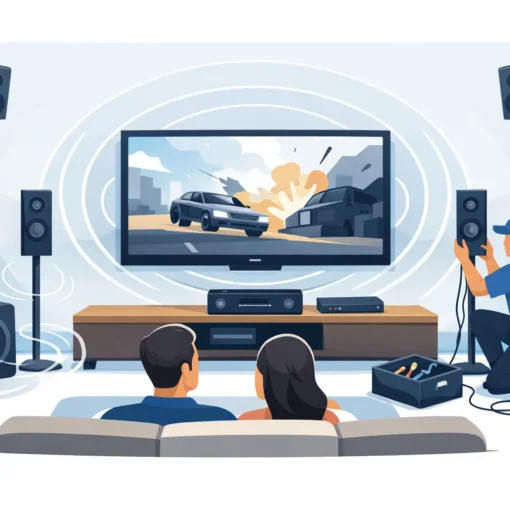
If picture gets the attention, sound is what makes a theater room feel convincing. Deep bass, clear dialogue, and surround effects all depend on speaker placement and room behavior. Even excellent speakers can sound disappointing when they are pushed into the wrong locations or dropped into a room with hard, reflective surfaces everywhere.
A proper theater plan considers where the left, center, and right speakers go in relation to the screen, where surround and height speakers should be positioned, and how bass will behave in the space. Subwoofer placement is especially room-sensitive. In one room, a single sub may work well. In another, two subs may create smoother, more even bass across multiple seats.
Then there is the acoustic side. Bare drywall, hard flooring, and large glass surfaces create reflections that blur dialogue and make the room sound harsher than it should. Acoustic panels, bass control, carpet, and soft finishes can dramatically improve clarity without changing the visual design of the room much at all. This is one of the biggest differences between a room with expensive equipment and a room that actually sounds right.
Lighting can help or hurt the experience
Lighting design is often treated like a finishing touch. In reality, it is part of the performance. Too much uncontrolled light washes out a projected image. Poor fixture placement can create glare on a TV screen. Bright overhead lighting can also make a room feel less comfortable during a movie.
A strong theater lighting plan uses layers. That might include dimmable overhead lights, low-level sconces, step lights for safety, and task lighting only where needed. It should also separate lighting into zones so the room can shift from cleaning mode to pre-show mode to full viewing mode without a fuss.
Window control matters just as much. In many Northern Colorado homes, basement theaters are ideal partly because they start with better natural light control. If the room has windows, shades or blackout treatments should be planned from the beginning rather than treated as an afterthought.
Equipment should fit the room and the user
There is a big difference between having high-end gear and having the right system. The best theater room equipment package is the one that fits the room size, performance goals, and ease-of-use expectations of the household.
For some clients, that means a clean 5.1 or 5.2.2 surround system with simple control and excellent value. For others, it means stepping up to more channels, dedicated amplification, acoustic treatments, custom cabinetry, and automation. Neither approach is automatically better. It depends on what level of experience you want and how often the room will be used.
Control is where smart planning pays off. A theater room with five remotes and confusing inputs gets old fast. A well-integrated system should let you start a movie, adjust volume, manage lighting, and switch sources without making guests ask for help. Convenience is not a luxury feature. It is part of what makes the room enjoyable.
Plan the infrastructure before the walls are finished
If you are building new or finishing a basement, this is the moment to think ahead. Prewiring, equipment location, conduit, power placement, ventilation, and networking should all be part of the design conversation before drywall goes up.
This is where theater room projects can either become clean and well integrated or awkward and compromised. You may want hidden speakers, a projector, a motorized screen, a rack in another room, or custom-built cabinetry for components. All of that is much easier to do well when planned early.
It also helps future-proof the room. No one can predict every technology change, but adding conduit paths, strong network access, and smart wiring locations gives you more flexibility later. That is especially valuable if you think your system may grow over time.
Budget decisions should be intentional
A well-designed theater room does not require spending top dollar in every category. In fact, that approach often creates imbalance. A huge screen paired with weak audio, or premium speakers in an untreated room, rarely produces the best result.
A better approach is to decide where performance matters most and where simpler solutions make sense. If movies are the priority, dedicate enough budget to sound, acoustics, and seating comfort rather than pouring everything into display size. If the room is multipurpose, flexibility and ease of use may deserve more weight than chasing a reference-level setup.
This is where experienced design help can save money, not just add cost. The right plan keeps you from buying gear that does not suit the room or paying later to fix preventable layout mistakes. Companies like Sound Investments build systems this way every day – around the room, the client, and the budget, not around a generic package.
The best theater rooms feel easy
When a theater room is designed well, you notice what is happening on screen, not the work it takes to make the room function. The sound feels balanced. The image feels comfortable to watch. The seats are in the right place. The lights behave. Nothing looks tacked on.
That is really the goal when thinking about how to design a theater room. Not just to create a space that looks impressive for a weekend, but one that keeps working for years, fits your home, and makes people want to sit down and stay for one more movie. If you plan carefully at the start, the room will reward you every time the lights go down.