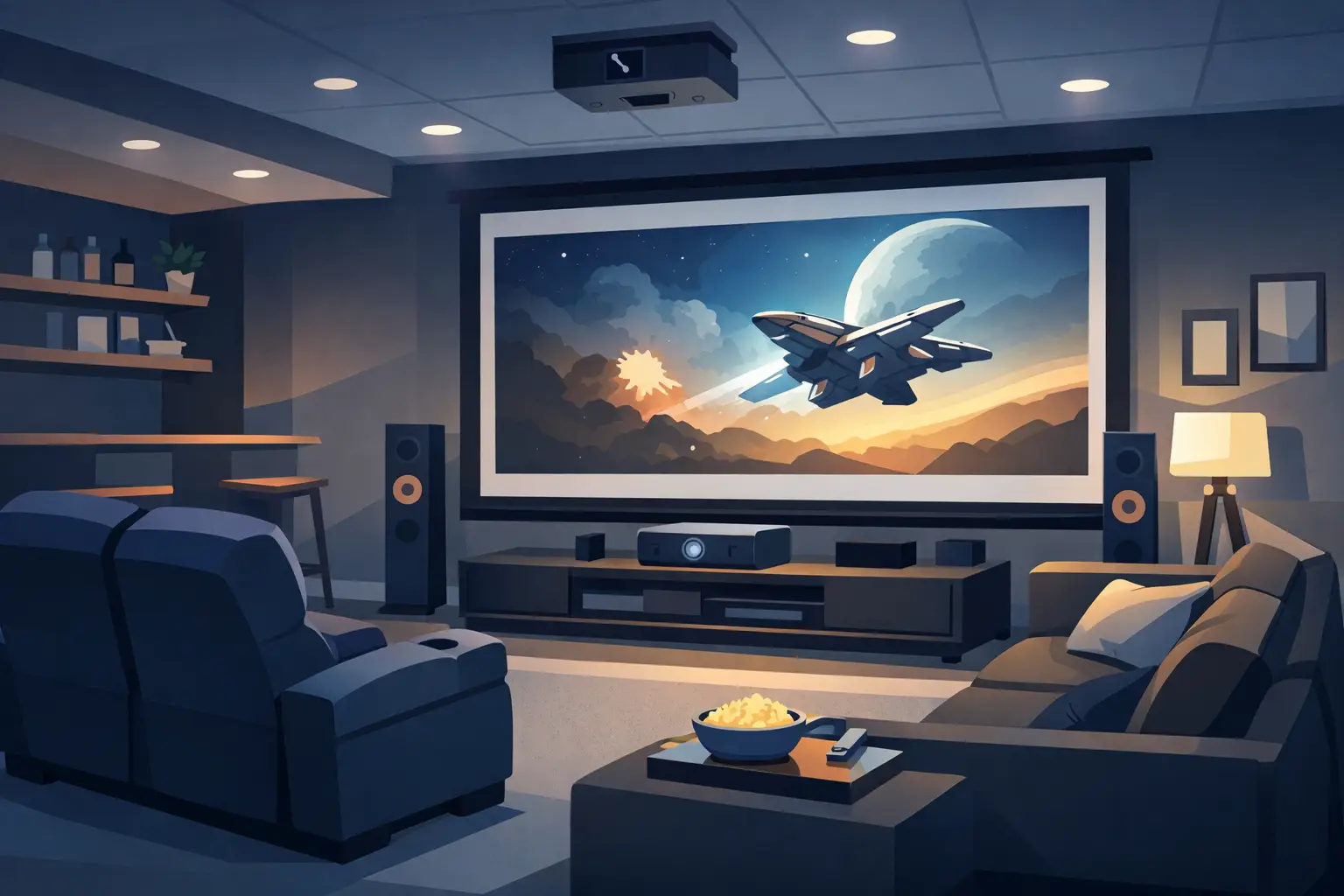
A great picture and powerful surround sound can carry a movie night a long way, but bad seating will ruin the experience faster than most people expect. When homeowners ask about the best home theater seating, they are usually not just asking which chair looks nicest in a showroom. They are asking what will feel comfortable for a full movie, fit the room correctly, preserve sightlines, and still make sense five or ten years from now.
That is the right question to ask. Seating is one of the biggest comfort decisions in any theater or media room, and it affects everything from screen height to speaker placement to how many people the room can realistically hold.
What makes the best home theater seating?
The best choice depends on the room, how the system will be used, and who is using it most often. A dedicated theater with multiple rows has very different needs than a basement media room that handles sports, streaming, gaming, and family movie nights.
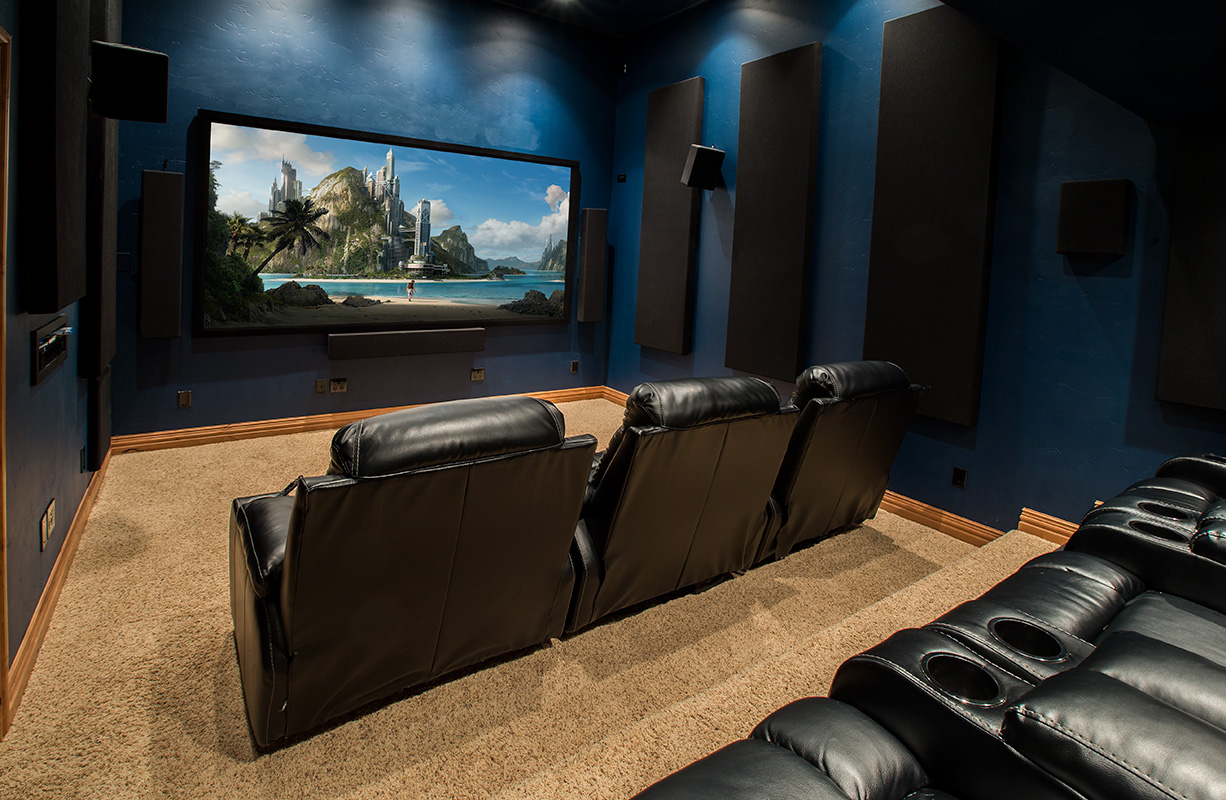
Comfort is the obvious starting point, but it is not the only factor. Good theater seating also has to support proper viewing angles, leave enough space for walking and reclining, and fit the scale of the room. A chair that feels excellent by itself can become the wrong choice when six of them are lined up and suddenly block pathways or push the front row too close to the screen.
This is where custom planning matters. In a well-designed theater, the seating is not an afterthought. It is part of the system design.
Start with the room before you choose the seat
One of the most common mistakes is shopping for seats before working out the layout. People find a style they like, count the number of viewers they want to accommodate, and assume the room will adapt. Sometimes it does. Often it does not.
The room tells you a lot. Width determines whether a row of three or four seats is realistic. Depth affects whether recliners will fit comfortably and whether a second row makes sense. Ceiling height matters if you are considering a riser. Screen size and placement influence where each row should sit.
In Northern Colorado, many theater projects happen in finished basements, bonus rooms, or multipurpose family spaces. Those rooms can work very well, but they usually come with existing constraints like soffits, windows, low ceilings, or traffic paths. The best home theater seating for one room may be completely wrong for another room of similar square footage because the shape is different.
Recliners, loungers, or a theater sectional?
There is no single winner here. It depends on how formal or casual you want the room to feel.
Dedicated theater recliners are popular for good reason. They support longer viewing sessions, usually include cupholders and arm storage, and create clear personal space for each viewer. They also tend to look right in a room built specifically for movies.
Lounger-style seating can be a better fit for households that want a relaxed, less traditional feel. These setups often work well in media rooms where people watch a mix of movies, TV, and sports. They can make the room feel more inviting for everyday use, but they may not define viewing positions as precisely.
Sectionals are sometimes the best answer in a hybrid room, especially when the goal is family comfort over a classic cinema look. The trade-off is that sectionals do not always support ideal sightlines for every seat, and they can complicate audio calibration if people sit in widely different positions.
The practical choice is the one that matches how you actually use the room, not the one that looks most impressive in a catalog.
Comfort matters, but so does posture
A seat can feel soft for five minutes and still be uncomfortable halfway through a long movie. That is why cushion support, back angle, headrest position, and footrest extension matter more than people realize.
A good theater chair should support a natural seated position without forcing your head too far forward or back. This becomes especially important in rooms with larger screens, where viewers spend more time looking slightly upward. If the headrest pushes the neck into an awkward angle, the problem shows up quickly.
This is also why oversized seating is not automatically better. Extra-wide seats can feel luxurious, but if they consume too much room, you may lose the proper spacing that makes the whole theater work. Bigger is only better when the room can support it.
Sightlines are where many seating plans fail
If the front row sits too close to the screen, viewers end up craning their necks or constantly scanning the image. If the second row is too low, people look over the heads of the front row instead of at the screen.
This is where risers, row spacing, and seat-back height all come into play. In multi-row theaters, the vertical relationship between rows has to be calculated, not guessed. Even small changes in platform height or chair design can affect whether every seat has a clear view.
The best home theater seating is not just comfortable on its own. It works as part of the entire viewing geometry.
Material choices affect maintenance and longevity
Leather and high-performance synthetic materials are popular because they are easy to clean and tend to hold up well. For families with kids or frequent entertaining, that can be a major advantage. Fabric seating can feel warmer and softer, and some homeowners prefer the look, but it may require more maintenance over time.
Climate and room use matter here too. A basement theater may stay cooler year-round, which can make certain materials feel more comfortable. In a room that gets daily use, durability often matters more than a specific finish.
There is also the question of appearance. Seating should work with the room’s design, including lighting, wall treatments, cabinetry, and flooring. In a custom installation, the chair is one piece of a larger visual plan.
Features worth paying for – and features you can skip
Power recline is usually worth the upgrade because it allows finer adjustment and tends to improve comfort for different body types. Power headrests can also be valuable, especially in rooms where screen placement creates a slightly elevated viewing angle.
Cupholders, USB charging, and storage arms are nice convenience features, but their value depends on how the room is used. If the theater is meant to feel clean and dedicated, too many visible add-ons can make the seating look busy. If the room is more casual, those features may be worth it.
What is not worth it is loading up on extras before solving the fundamentals. A chair with every feature in the world is still the wrong choice if it does not fit the room properly.
Budget matters, but value matters more
Home theater seating spans a wide price range. That can be helpful, but it also creates confusion because people assume all chairs are roughly interchangeable. They are not.
Lower-cost seating may look similar in photos, yet differ significantly in frame quality, motor reliability, cushion support, and finish durability. That does not mean every room needs premium seating. It means you should match the product to the goals of the project.
If this is a dedicated theater you plan to use for years, seating is one of the areas where buying better often pays off. If the room is a casual media space with lighter use, a more budget-conscious option may be perfectly appropriate. The right answer depends on how permanent the space is and how high your expectations are for comfort and longevity.
Why professional layout planning makes a difference
The best results usually come when seating, screen placement, speaker locations, lighting, and room finishes are planned together. That is how you avoid the chain reaction of compromises that happens when pieces are chosen one at a time.
For example, seating depth affects row spacing. Row spacing affects projector positioning and sightlines. Sightlines affect screen height. Screen height affects front speaker placement. A change in one area can push three other decisions.
That is why a consultation-led approach saves time and frustration. At Sound Investments, seating is evaluated in the context of the full room so homeowners get a system that feels right when it is actually installed, not just when it is sketched out.
The best seat is the one that fits the whole experience
There is no universal winner for the best home theater seating because the seat itself is only part of the decision. The real goal is a room that feels comfortable, looks proportioned, supports the technology properly, and gets used often.
If you are planning a theater or upgrading an older setup, think beyond the chair by itself. Measure carefully, consider how your household really watches, and choose seating that supports the room instead of competing with it. The best theater rooms are the ones where everything works together, and the seating is a big part of that feeling.